
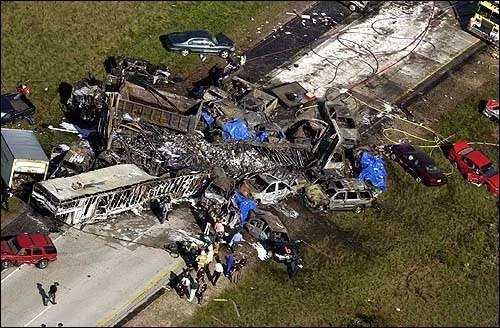
 October 11, 2002. Early that morning, my wife and I packed up our things and we were headed for Milwaukee. We left before breakfast, thinking that we would eat once we got further down the road. We were going to babysit our grandkids while our son and daughter-in-law flew out on a short trip. We were on a tight schedule, coordinated so that they could leave for the airport in plenty of time. Just before we got on the interstate, I insisted that I just needed a quick donut from the convenience store, even though she didn’t want me to delay us. As we got on the interstate, there was more low fog, as I-43 runs along Lake Michigan’s coastline pretty tight in some areas. A few miles south of Sheboygan, the fog really started getting heavy, we slowed down a lot, and I had to hit my brakes hard as I saw a vehicle in front of me pull over hard and the driver jumped out – turned out he was a local volunteer fireman that had been directed to divert traffic off the interstate. He frantically waved us to get off the highway at the exit ramp. I rolled down the window to ask what was up and he just screamed “Get off the highway! There’s a huge pileup just ahead! Get off now!” We took a meandering parallel way on back roads south and got back on I-43 a few miles later. One of the kids called us, as they knew our morning schedule, and they wanted to know if we had seen the big pile-up. We had not. They said it was all over the news, that there was a big pileup in the fog near Oostburg. People who experienced it said it was suddenly a “wall of fog”, and we can attest to that. In the end, there were ~40 vehicles involved, 10 deaths, and 39 injured in the deadliest traffic incident in Wisconsin’s history. The first responder who waved us off the highway turned out to be our lifesaver that day, but the donut played a part, too. Had I not stopped for the donut, we would have been at that spot 2-3 minutes sooner, and never have seen the first responder.
Days and weeks later, I would learn that a fellow I used to work with was driving an LP gas delivery truck that exploded at the scene, leaving him burned over 75% of his body, but miraculously alive, and a high school classmate of mine narrowly avoided the vehicles, but found himself way up the hill alongside the scene, having gone through a barbed wire fence into a plowed field.
Someone was watching out for us that day.
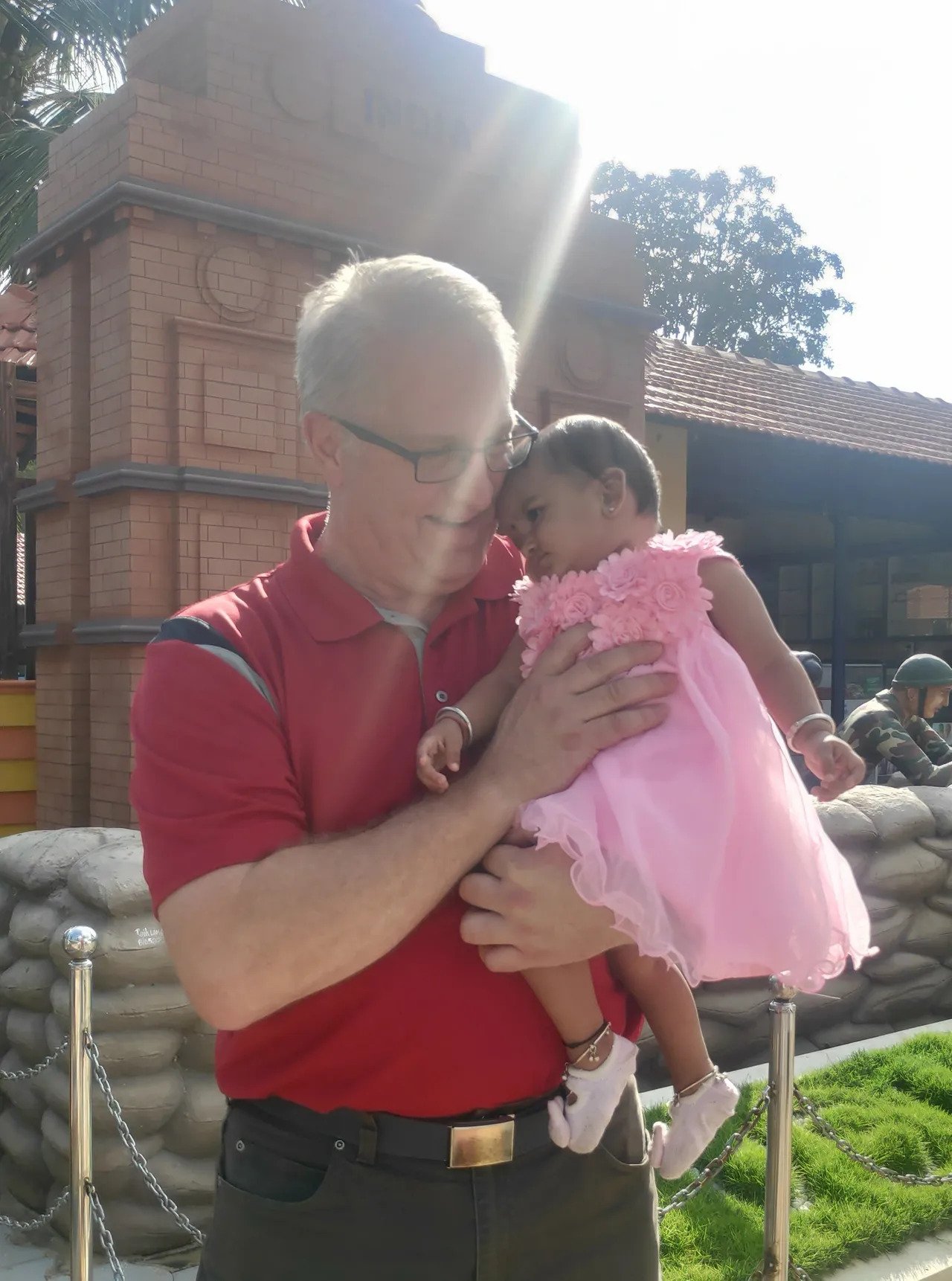
 I had the wonderful opportunity to visit India in 2019. My first stop was in Tiptur, Karnataka, about 3 hours’ drive west of Bengaluru. They speak a language called Kannada there. Hoṭṭe tumbide (sounds like “otay toombiday”) is a Kannada phrase that means “Full stomach”. When I learned the phrase, I had just finished a very filling lunch meal with 5-6 Karnatakan fellows, and while I indeed had a full stomach from the fantastic lunch presentation and meal, they helped me understand that hoṭṭe tumbide had a second meaning or connotation, that one’s life was full, a feeling encompassing gratefulness and peaceful satisfaction, one which transcended the fullness from the meal itself. I found myself feeling that hoṭṭe tumbide feeling, along with a desire to help others experience that feeling. It lent itself well to using it as a general greeting. The locals certainly found it engaging and positive.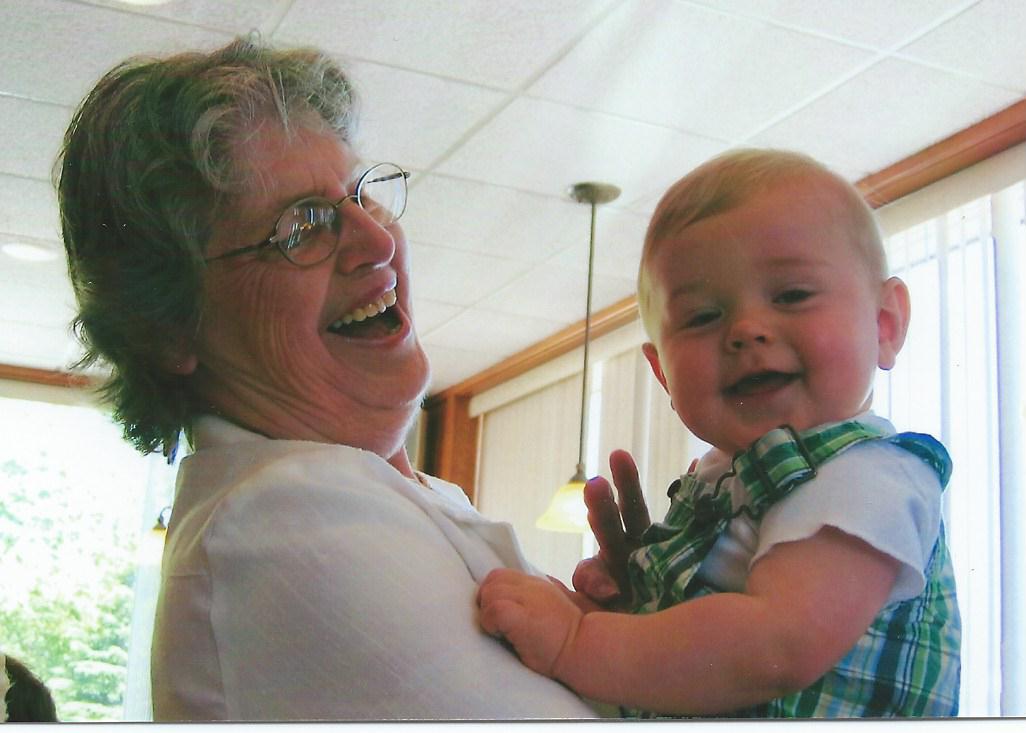
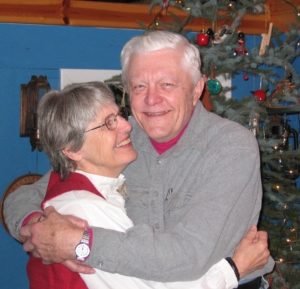
 My dad did, too, but that’s another story. My mother was what you would call an extremely hard-working, high-achieving champion of her beliefs and her family. I am the 3rd son born to my parents, and after I was born, my parents started adopting. They didn’t stop until they had adopted 13 more – 5 from Korea, 3 from the Philippines, and 5 mixed-race from the U.S. All considered “hard-to-place” kids. Both of my parents were highly involved in the equal rights movement of the ‘60’s in Milwaukee, taking us to picket for our first time when I was only 5 years old, protesting the prohibition of black membership in social clubs like the Elks. She took us all along as kids while she taught English to migrant worker families (some of whom ended up lifelong friends), but most of all, our parents taught us to appreciate other cultures, foods, music, people who didn’t look like us or talk like us. It shaped us all, and I didn’t really appreciate that for many years. She also taught us to live thankfully, with gratefulness simmered into our sauce, and with a song on our hearts and a smile on our face.
 “Take things that are light enough to carry and heavy enough to remember.”